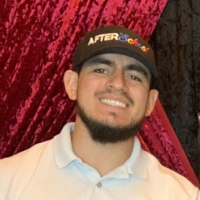
Why the Student Workforce Model Changes Everything in Afterschool
What I Saw at PAL Charter Academy
I was a CTE Computer Science teacher at PAL Charter Academy in San Bernardino, California. Every day I watched the same thing happen at 3:00 PM: students rushed to leave campus. Not because they had somewhere better to be. Because there was nothing for them to stay for.
In that part of San Bernardino, the alternative to afterschool programs is real. Students who are not engaged after the bell rings are more likely to encounter drugs, alcohol, and other situations that pull them away from their education. This is not hypothetical. I saw it happen with students I taught.
The afterschool programs that did exist had a staffing problem. Not a funding problem, not a curriculum problem. A people problem. The coordinators were stretched thin. The vendors would send someone who followed a generic playbook and left after one semester. I watched this cycle repeat while teaching grades 9 through 12.
What stuck with me was the gap in technology education specifically. My students were building PCs from scratch, writing code, and shipping real applications in my classroom. But at 3:00 PM, all of that stopped. There was nothing extending that experience into after-school hours.
The Near-Peer Effect Nobody Talks About
When I started Student Hires, we hired two undergraduate students from the University of California, Riverside. I developed the curriculum myself, based on what I had already learned from teaching computer science. They ran CS classes across multiple campuses.
The first thing we noticed surprised us: students responded differently to college-age instructors than they did to traditional staff. A 20-year-old standing at the front of an afterschool classroom is not a teacher, not a parent, not a substitute. They are something closer to an older sibling. Someone who feels reachable.
This is the near-peer mentoring concept, and it changed everything about how we think about afterschool staffing. When students connect with someone only a few years older than them, engagement goes up. Attendance goes up. The energy in the room changes.
We started tracking Average Daily Attendance, the standard benchmark for afterschool program engagement. Our programs consistently hit over 90% ADA. Students were not just showing up. They were going home with projects, telling their parents about what they built, and that excitement bled into the entire campus.
That is the difference between a warm body filling a shift and a near-peer mentor who actually connects with kids.
Building Student Hires from the Classroom
I did not cold-call a district office and pitch a startup. Student Hires grew out of conversations I was already having as a teacher. I was at PAL Charter Academy, talking to colleagues and administrators about my ambitions to create workforce opportunities for college students. Those conversations led to our first CS instructors being placed across multiple campuses.
Because I was already in the system, I understood what schools actually needed. I understood bell schedules. I understood which rooms were available after 3:00 PM. I understood the difference between what administrators say they want and what actually works when you are standing in front of 25 students after a full school day.
That insider knowledge made everything easier. I was not an outsider pitching a product. I was a teacher who built something to solve a problem he saw every day.
What Went Wrong Along the Way
There are a lot of stories I could tell about things going sideways.
Early on, staff would call out and I would have to fill in myself. That is how I ended up teaching in elementary settings, working with kids as young as transitional kindergarten and kindergarten. Nothing prepares you for running a program with five-year-olds when your background is teaching high school computer science. But it taught me something important: if you are going to build a company that staffs schools, you need to understand every grade level, not just the ones you are comfortable with.
We also did not have foundational documents ready. No program application. No onboarding packet. No standardized training materials. We were building everything from the ground up while simultaneously running programs. Every process we have today exists because we did not have it when we needed it.
Those early days were messy. But every system we built came from a real problem we hit, not from a planning document written in a conference room.
When Parents Fight for You and the System Says No
After one of our most successful year-long programs, we lost a contract. Not because of performance. Because of the RFP process.
School districts use a Request for Proposal process to select afterschool vendors. Evaluators score proposals based on written responses. Our program had delivered results all year. Parents knew it. Students knew it. The school knew it.
When the contract was not renewed, parents organized. They wrote letters. They called school district officials. They asked the district to keep Student Hires at the school.
It did not matter. The RFP evaluation scored our written response as inadequate, regardless of our track record on the ground. The project went to someone else for the next year.
That experience taught me two things. First, the RFP process in school districts has real inefficiencies. Written proposals do not always reflect operational quality. Second, families are the ones who bear the burden when the system prioritizes paperwork over performance. Their kids are the ones who lose a program they loved because of how a proposal was formatted.
We have gotten significantly better at the RFP process since then. But I still think about those families.
Why This Is Not Just Another Afterschool Program
The biggest misconception district leaders have about Student Hires is that we are just like every other afterschool program. And I understand why they think that. Any company can put together an afterschool program. The barrier to entry is low. Every vendor will claim that their program is the best.
What separates us is the student workforce model. We do not just staff programs. We build a pipeline where college students gain real career experience while delivering engaging instruction to younger students. That near-peer dynamic creates more engaging environments, which makes K-12 students more excited to learn, which makes schools look better overall. That effect bleeds into the community.
This is not a marketing pitch. It is a structural difference in how the program operates. When your afterschool staff are college students building their careers, they bring a different energy than someone working a shift.
What I Actually Tell District Leaders
When a district leader asks me "why should not I just hire college students directly instead of going through Student Hires?" I tell them they should.
Every district has local colleges nearby. Those colleges have students who need work experience to build their career portfolios. More importantly, those students have skills that districts could benefit from. I tell districts to hire as many as possible. Get unpaid interns. Build relationships with your local university career centers.
Where we come in is when managing those programs becomes the challenge. When a district has 30 college students across 8 school sites and needs help with hiring, training, scheduling, and quality control, that is where Student Hires operates. Whether as the overall program facilitator, the hiring agency, or by providing structured training through programs like our Future Educator Certification Program.
We are not trying to be the only option. We are trying to be the infrastructure that makes the student workforce model work at scale.
If you want to talk about what this could look like for your district, reach out directly: hello@manuelzavala.com.